Malacca Zoo welcomes baby Banteng
 Cute creatures: Serows resting in their enclosure at the Malacca Zoo. Besides a baby Serow, a baby Banteng (inset left) is one of the latest additions to the menagerie and Aprilina the baby orang utan (inset right) appears to be in good health.
A male baby Banteng (bos javanicus) has become the latest and cutest addition to the Malacca Zoo.
The baby Banteng, born on July 10, is yet to be named and among the names being considered by the zoo’s management is Rama or Raman.
The Banteng, species under the bovidae family, is currently classified as “threatened” under the International Union for Conservation of Nature’s (IUCN) Red List with an estimated total world population as less than 10,000 animals.
Three months ago, the buzz was over Aprilina, a female orang utan born in the zoo, which was privatised on Jan 1.
Since then, the zoo has registered the births of a female Serow (Capricornis sumatraensis), a species of mountain goat under the IUCM status of “vulnerable” and a baby Malayan porcupine (hystrix brachyura).
Zoo representative Catherine Yang said the team was still excited by Aprilina.
“As Aprilina is the star in our zoo, special attention is given to her although she still clings to her mother, Tina, ” she said.
Yang said the baby primate’s arrival was a nice surprise as it was a captive birth.
“We were hopeful of such a birth and it happened a few months after the privatisation,” she said
Yang said the baby Banteng’s birth was also considered auspicious as it was born on the first day of the Muslim holy month, adding that the baby Serow had been named Blackie.
Malacca Zoo’s veterinarian Dr Reza Ismail said the mother and baby orang utan were being monitored closely and so far they appeared to be in good health.
Dr Reza said Tina had taken an active role in its care, which is common among primates.
“Tina plays an important role as mother while we constantly monitor the progress of Aprilina,” he said.
Tina was very protective of the newborn and shielded her baby from the photographer when The Star attempted to take pictures.
She made faces and wagged her tongue at the camera lens.
Zoo staff members eventually took both Tina and Aprilina to the show area, where photographs were taken discreetly.
~News courtesy of The Star~
Malaysians and tourists put on masks in Malacca
 People wearing masks in public places in Malacca.
Many locals and tourists were seen wearing face masks as the historic city was shrouded in haze.
Low visibility also slowed down traffic to the major tourist areas in the city.
However, activities that were planned earlier, such as the dragon boat race, held in conjunction with the annual Malacca River Festival, went on as scheduled yesterday.
Malacca Health and Sports Development executive chairman Datuk Ab Rahaman Ab Karim said the state government would consider cancelling outdoor, sports and co-curriculum activities in schools if the situation worsened.
“Classes will continue as of now but we will stop all outdoor activities in schools if the need arises.
“In the meantime, we are monitoring the Air Pollution Index readings closely,” he said.
Ab Rahaman said the state Health Department would also consider distributing free face masks to all students and civil servants.
In Muar, the clear weather in the morning turned hazy suddenly by mid-afternoon.
Visibility dropped to less than half a nautical mile in most parts of the coastal areas.
The Muar river estuary, the Muar Bridge and most of the areas in town as well as Tanjung Agas were covered by thick haze by 4pm.
Muar marine police chief Asst Supt Nordin Osman said as visibility in the sea was poor, all vessels plying the Malacca Straits should take precautions and navigate with utmost care.
“Fishermen in small boats should refrain from going out to the sea for now and fishing trawlers must switch on their lights,” he added.
~News courtesy of The Star~
An age-old lesson in unity
 In Malacca’s old-world quarter: The Cheng Hoon Teng Temple in Jalan Tukang Emas, which was founded in 1645, is the oldest functioning Taoist temple in the country.
Houses of worship along Malacca’s Harmony Street a reminder of our forefathers’ mutual acceptance.
IF A street can knock some sense into politicians bent on using race and religion to divide the people, this is it.
It is combination of two roads — Jalan Tukang Emas (Goldsmith Street) and Jalan Tokong (Temple Street) — located in Malacca’s old-world quarter.
This stretch of road, referred to as ‘Harmony Street’ by the locals, is among the city’s must-see tourist attractions.
Here, ancient places of worship of the top three religions practised in the country are located in close proximity to each other and on the same side too.
The Sri Poyyatha Vinayagar Moorthi Temple, the Kampung Keling Mosque and the Cheng Hoon Teng Temple are grand testaments of religious pluralism practised in Malacca, the cradle of modern Malaysia.
They stand as splendid reminders of the old days when people had mutual acceptance and respect for each other, irrespective of ethnicity or religion.
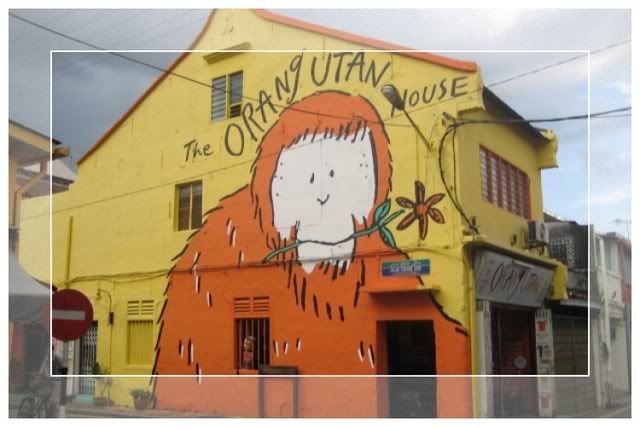
The Sri Poyyatha Vinayagar Moorthi Temple, which has some elements of Dutch architecture, is the first to be seen if one comes from the direction of Jalan Tukang Besi (Blacksmith Street) and Lorong Hang Jebat junction where the iconic Orangutan House is.
Built in 1781 on a piece of land allocated by the Dutch, it is reputedly the oldest temple of its kind in Malaysia that is still in use.
It is linked to major festivals and remains very much a part of Hindu culture and practice in the city.
The temple is dedicated to Vinayagar, one of the 108 names of Ganesha — the elephant-faced Hindu deity.
Known as the ‘Lord of Obstacles and Remover of Obstacles’, his name is usually invoked at the beginning of all forms of worship and rituals.
As the deity is associated with luck, prosperity, well-being and wisdom, the Sri Poyyatha Vinayagar Moorthi Temple is also popular among locals of other races.
At the corner of Jalan Tukang Emas and Jalan Hang Lekiu stands the quaint Kampung Keling Mosque, built in 1748.
The mosque, built using timber on a square plan rather than the typical rectangular or hexagonal plan, has a curious blend of Eastern and Western features.
It has Corinthian columns, Chinese and Dutch decorative titles, arched windows, a verandah covering the prayer hall and a courtyard with a fountain-like pool for ablutions.
Like other old mosques in the city, its minaret and three-tier green roof look more like they belong on a pagoda than a mosque.
Although areas near the Malacca river in town is now regarded as Chinatown, the area stretching from Lorong Hang Jebat to Jalan Hang Lekiu was where Indians, primarily Tamils and Tamil Muslims lived.
The term keling referred to people from India and was not considered offensive or derogatory as it is deemed now.
It can be traced to the cultural and trading influence of the ancient Kalinga kingdom over the Malay Archipelago.
Kalinga was a powerful military and naval kingdom located in south-eastern India near modern-day Orissa and Andhra Pradesh. It was conquered by emperor Asoka in 262 BC.
Although later traders from India came from the Coromandel coast in south-east Tamil Nadu and from Gujarat in the north, Malays referred to the area as benua keling.
Castanheda, a Portuguese traveller who lived in Malacca between 1528 and 1538 wrote:
“In the northern part of the city live merchants who are known as Quelins (Klings). In this part, the town is much larger than any other. There are in Malacca, many foreign merchants, who I said before, live among themselves. They are Moors (Muslims) and pagans..... “
The third house of worship along Harmony Street is what the baba and nyonya call ‘Kebun Datok’ (Garden of the Gods) and Kwan Yin Teng (Goddess of Mercy Temple).
Cheng Hoon Teng (Temple of the Clear Clouds in Hokkien), the oldest functioning Taoist temple in the country, was founded in 1645 by local Chinese leader, Kapitan Tay Kie Ki alias Tay Hong Yong.
Its architecture and intricate details showcase the skills of migrant builders and craftsmen from China’s Fujian and Guangdong provinces.
The huge temple complex conforms the principles of feng shui, based on managing harmony with nature. Based on what has been written on granite tablets, the temple was laid out to ensure a view of the river and the high ground on either side.
The temple’s central altar is dedicated to Kuan Yin and to her left is Ma Choo or Ma Choe Poh deity, the patron deity of fishermen, sailors and sea travellers.
There are also altars dedicated to the goddess of birth, Kuan Kong (a Chinese general deified during the Sui Dynasty) and the gold-faced Pau Sen Ta Tek, the God of Welding.
In the early days, in addition to being a religious institution, Cheng Hoon Teng also served as the official administrative centre and court of justice of the Kapitans.
The British abolished the Kapitan system in 1824, but the leader of the Temple, now known as “Teng Choo”, assumed some of the Kapitan’s roles.
In 1824, the British abolished the Kapitan system and the leader of the temple, now known as “Teng Choo”, assumed some of the Kapitan’s responsibilities.
Later, a Board of Trustees was formed and the pioneers included Tun Sir Tan Cheng Lock, who also initiated the temple’s unique incorporation under an Act of Parliament.
The Cheng Hoon Teng Temple Incorporation Ordinance 1949, passed in Parliament in September 1949, effectively guaranteed the temple’s future and its role as guardian of the community’s spiritual and cultural heritage.
~News courtesy of The Star~
Historical city’s fascinating draw
 Art and technology: According to Tourism Melaka, this Melaka Sultanate Watermill has been recorded as the first and largest watermill in Malaysia. It was built in late 2007 and completed in March the next year.
MALACCA is the perfect stop for parents looking for an educational and fun trip for their young children.
Visiting the historical places there certainly makes history lessons for primary school pupils, in particular, more interesting.
Malacca, with its tourism slogan “Visit Historic Melaka Means Visit Malaysia” has to live up to the theme in several ways.
The first stop in Malacca should be the Padang Pahlawan or Warriors Field — the place where the proclaimation of independence was made by Malaysia’s first Prime Minister Tunku Abdul Rahman Putra Al-Haj.
Local and foreign tourists should spend some time — depending on their interest in history — to take a closer look at invaluable exhibits of the country’s journey; anything from relics and manuscripts to films and slides.
From the memorial, tourists can proceed to A Famosa, built by the Portuguese when they conquered Malacca in 1511.
While only the entrance to the fort remains today, it is certainly a crowd puller.
The old canon attracts young children, who enjoy getting photographed with it.
Foreign tourists have a preference for relics, and can be seen getting a closer look at these.
Another interesting place to learn more about Malacca’s rich history is the Maritime Museum Complex.
The complex, a life-size replica of the Portuguese ship Flor de Lamar in the 16th century, showcases Malacca’s maritime history and the golden age of the Malacca sultanate.
To rest their tired feet, tourists can take a ride on the Malacca River Cruise.
The picture-perfect scenery along the river include old shophouses, some turned into open air cafes that attracts foreign tourists who enjoy taking in the sights.
The clean environment complements the beautiful surroundings, especially the river.
Those tasked with managing various tourism spots in other states, including Perak, could perhaps learn from Malacca.
The 45-minute cruise also showcases the multicultural heritage of Malaysia through beautiful murals along the river bank. It is indeed a cruise not to be missed.
For MyKad holders, the ticket price for adults is RM10 and RM5 for children.
A half-day tour covers these few places in a leisurely pace.
The city was packed with tourists during the school holidays at the end of last month.
Besides being famous as a Unesco world heritage site, Malacca’s achievements in tourism show that there is so much potential in the country, which can be developed into a world-class product with proper planning and good vision.
~News courtesy of The Star~